




Blog
Neck Pain Treatment London: The Complete Multidisciplinary Guide

Written by: James Gill BOst GOsC 6039. Registered Osteopath, Founder & Clinic Director

Medically Reviewed: Yvan Loneux, M.Ost GOsC 10705. Registered Senior Osteopath
What a pain in the neck! Neck pain is one of the most frequent complaints we assess across our London clinic network. It is a highly disruptive condition that can strike suddenly, causing severe discomfort and instantly restricting your ability to work, commute, or sleep.
Because the neck is home to a highly complex, dense cluster of muscles, stabilising ligaments, delicate facet joints, shock-absorbing intervertebral discs, and sensitive nerve pathways, an injury or strain here can radiate pain far beyond the neck itself-frequently triggering tension headaches, upper back pain, and even neurological symptoms down into the arms and fingers.

Understanding the Cervical Spine
The neck-medically referred to as the cervical spine-is uniquely engineered out of seven vertebrae labeled C1 through C7. To protect the structural integrity of your spine during daily movement, a fluid-filled intervertebral disc sits between each bone to provide necessary cushioning and absorb mechanical shock.
These vertebrae connect to one another via pairs of small, highly sensitive structures known as facet joints. Supported by a network of exactly 32 distinct muscles and numerous stabilising ligaments, your cervical spine is the reason your head has such a dynamic, wide range of motion. Additionally, the vital nerves exiting the cervical spine innervate these muscles and supply direct motor and sensory function to your shoulders, arms, forearms, and hands.
Clinical Timelines: Acute vs. Chronic Pain
- Acute Onset: Most neck pain begins suddenly, with symptoms lasting anywhere from a few days to a few weeks. This is typically the result of a straightforward soft-tissue micro-strain or ligamentous sprain.
- Neck Pain: If your symptoms persist steadily between 4 weeks and 3 months, the condition enters the subacute phase, indicating that the initial tissue irritation is not resolving on its own.
- Chronic Neck Pain: Pain lasting longer than 3 months is classified as chronic. This long-term discomfort is an explicit signal that an underlying mechanical imbalance or specific condition requires targeted professional treatment and deeper clinical investigation.
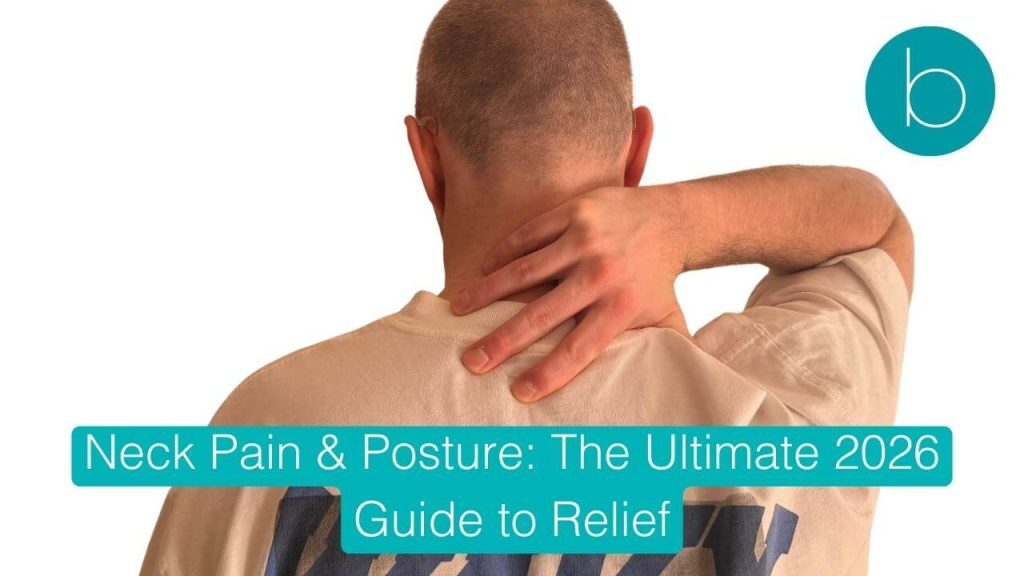
What Are the Common Causes of Neck Pain?
Neck pain rarely happens in isolation. Identifying the precise mechanical or structural cause of your discomfort is the first step in formulating an effective treatment pathway. Our clinical team routinely treats and manages the following primary conditions:
1. Neck Muscle Strain (Myofascial Tension)
A muscle strain occurs when the soft tissues in the neck are stretched beyond their functional limits, resulting in microscopic tearing, local inflammation, and painful guarding. This is usually caused by cumulative fatigue, improper desk ergonomics, or sudden muscular overload. The two muscles we find most commonly involved are:
- The Trapezius Muscle: This large, kite-shaped muscle blankets the area from the base of your skull, spans wide across your shoulders, and travels halfway down your back. It controls essential head movements, tilts, and shoulder stabilisation. When strained or overworked, it produces a constant, exhausting ache across the top of the shoulders.
- The Levator Scapulae Muscle: This muscle runs vertically down the side of the neck, connecting the top of the cervical spine directly to your shoulder blade. A strain here is typically responsible for that acute, painful sensation of a “locked neck,” making it incredibly difficult to turn your head from side to side.
Struggling with painful neck posture? Don’t let muscular guarding lock your neck. Book a comprehensive Initial Assessment and Treatment in Canada Water or Stratford today.
2. Ligament Sprains
Ligaments are the tough, fibrous bands of connective tissue that anchor bone to bone, giving your joints essential structural stability. A cervical sprain occurs when a joint is forced past its safe range-either through a sports impact, a slip, or a sudden bracing movement-causing the ligament fibers to overstretch or micro-tear. The symptoms closely mirror a muscle strain but often feel deeper, sharper, and result in a distinct feeling of structural weakness when moving your head.
3. Cervical Facet Joint Dysfunction
Supported by an intricate layer of localised ligaments, your facet joints dictate the fluid tracking of your neck movements. These delicate joints can easily become inflamed, restricted, or locked due to poor sleep posture, chronic slouching, or minor trauma. This irritation results in a sharp, localised, “pinching” pain whenever the neck is turned or tilted toward the affected joint.
4. Cervical Spondylosis (Osteoarthritis of the Neck)
This term refers to the natural, age-related structural changes that occur within the cervical spine, primarily affecting the facet joints and intervertebral discs. As the spine matures, the protective cartilage within the joints gradually wears down, which can lead to localised friction, progressive stiffness, bone spur development, and chronic low-level inflammation. If this wear leads to a narrowing of the spaces where nerves travel, it can cause a secondary condition called spinal stenosis. This can result in localised neck pain accompanied by neurological symptoms like numbness, tingling, or a heavy sensation in the arms and hands.
5. Cervical Spine Disc Herniation
Through sudden physical trauma, a lifting injury, or long-term chronic wear, an intervertebral disc can become structurally compromised. When this happens, the gel-like inner core of the disc can protrude through its tough outer fibrous casing. This is medically known as a disc herniation, protrusion, or slipped disc. While more prevalent in the lower back, a herniated disc in the cervical spine can directly compress or chemically irritate adjacent nerve roots. This nerve root compression typically causes sharp, shooting pain, pins-and-needles, or muscle weakness that travels predictably down the shoulder, arm, forearm, and into the fingers.
6. Whiplash
While commonly associated with motor vehicle collisions, a whiplash mechanism can occur during cycling accidents, falls, or contact sports. Whiplash refers to a rapid, high-velocity acceleration-deceleration force that whips the head and neck backward and forward. This sudden impact violently overstretches and tears the delicate muscles and ligaments throughout the cervical region. The result is often severe neck pain, profound structural stiffness, tension headaches at the base of the skull, localised tenderness, and shoulder pain.
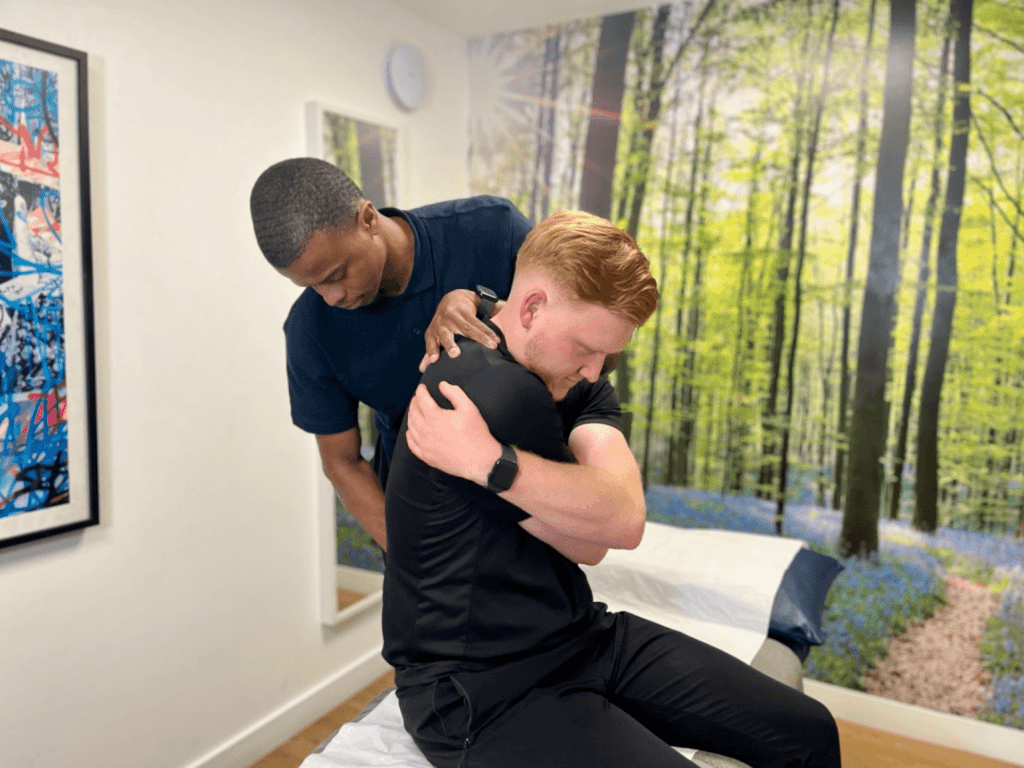
How Is Neck Pain Diagnosed?
At bodytonic clinic, an accurate diagnosis is paramount to ensuring safe, effective clinical outcomes. Your physical therapist will form a diagnostic baseline based entirely on your unique presenting symptoms, medical history, and physical evaluation.
During your initial consultation, your practitioner will guide you through a thorough clinical assessment:
- Subjective Case History: A series of targeted questions to determine the exact onset, behavior, and triggers of your neck pain. Postural & Ergonomic
- Evaluation: Assessing how your global spinal alignment, shoulder mechanics, and work-desk setups are impacting your cervical spine.
- Orthopaedic & Neurological Testing: Checking your active range of motion, muscle reflexes, dermatomal sensation, and specific nerve conduction pathways to identify the exact tissue causing your pain.
Advanced Diagnostic Triage
In complex cases, or where symptoms show signs of deeper structural compromise, further diagnostic testing may be recommended via our medical network:
- X-Ray Imaging: Utilised to observe the overall alignment of the spine, joint spacing, and to check for bone spurs or changes associated with osteoarthritis.
- Magnetic Resonance Imaging (MRI): The gold standard for visualising soft-tissue structures. An MRI provides high-definition views of intervertebral discs, nerve root compression, ligaments, and the spinal cord. This is recommended if a symptomatic disc herniation is suspected.
- Electromyography (EMG): Measures the electrical activity of muscles at rest and during contraction. This test is invaluable if you report muscle weakness or loss of motor control in your arms or hands.
- Blood Tests: Not typically used for mechanical neck pain, but clinical blood panels are requested to screen for markers of systemic inflammation, infection, or underlying rheumatological conditions.
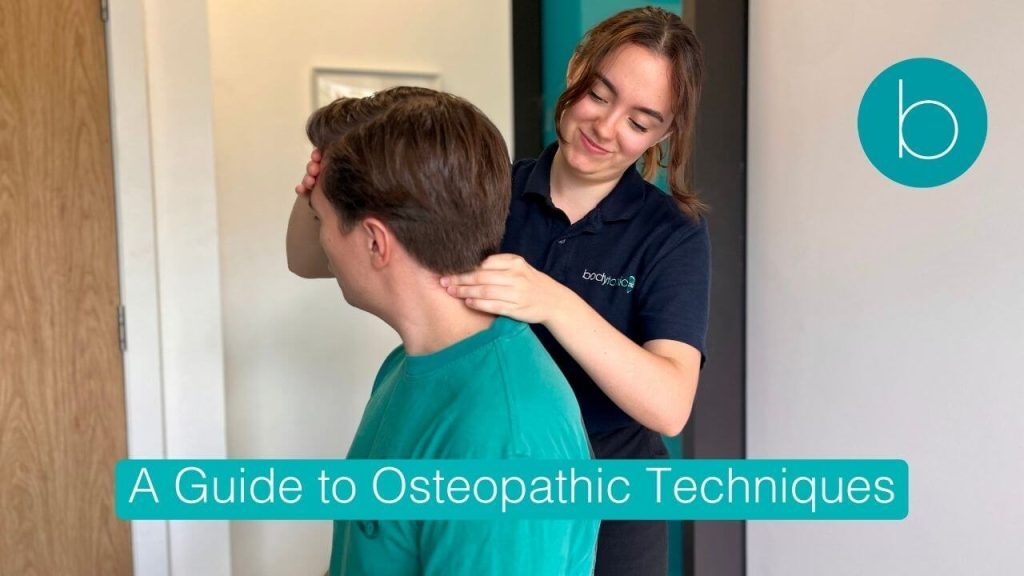
What Are the Professional Treatment Options?
The ideal treatment plan depends entirely on the root cause of your neck pain, its duration, and its severity. Uncomplicated mechanical neck pain responds exceptionally well to a multidisciplinary approach combining hands-on physical therapy with structured rehabilitative exercise.
Non-Surgical Options
Specialist Clinical Therapy: Osteopathy, Physiotherapy & Chiropractic Care
Visiting a qualified primary healthcare practitioner-such as an osteopath, physiotherapist, or chiropractor-is highly effective for identifying the exact mechanical source of your neck discomfort and safely reducing soft-tissue tension. Each discipline excels at the non-invasive management of acute and chronic mechanical neck pain, offering unique clinical strengths tailored to your recovery:
- Osteopathy & Physiotherapy: Our therapists focus on restoring total functional mobility. They combine deep Soft Tissue Massage & Myofascial Release to alleviate painful muscle spasms with passive Joint Mobilisation to restore fluid tracking to locked facet joints. They may also incorporate targeted Medical Acupuncture (Dry Needling) to desensitise overactive cervical nerves and break up chronic tissue band. – chiropractors also do medical acupuncture.
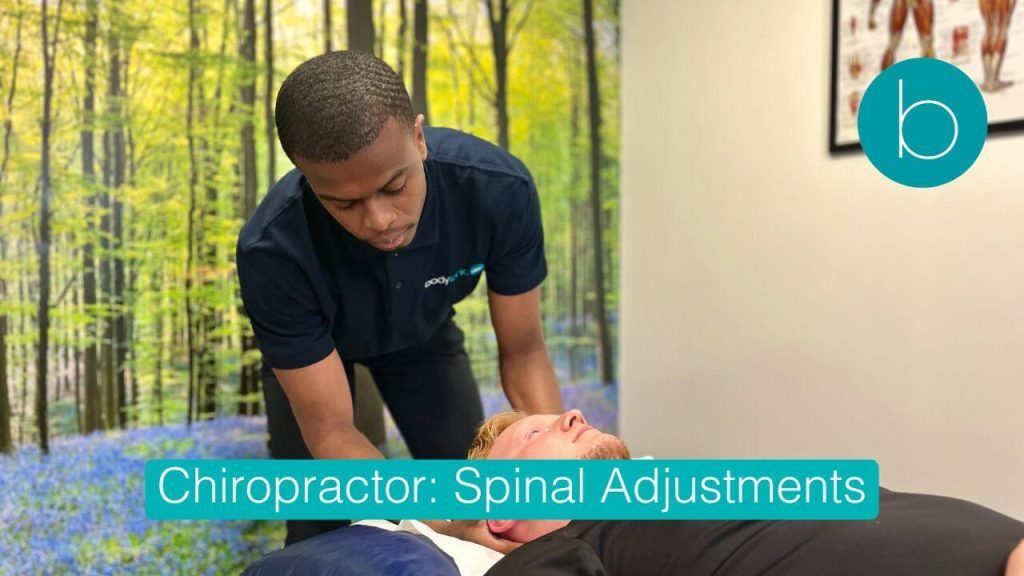
- Chiropractic Care: Our chiropractors focus deeply on the precise mechanical tracking of individual spinal segments. By utilising highly targeted, gentle Precision Adjustments, mobilisation and soft tissue techniques directly to the cervical and thoracic spine, chiropractic care helps relieve localised joint locking, reduce mechanical stiffness, and modulate nervous system pain signaling.
Beyond hands-on clinical care, your practitioner provides essential lifestyle coaching. This includes personalised ergonomic desk modifications, advice on heat or cold therapy, guidance on pacing your daily activities, and a structured, progressive exercise plan for a safe, pain-free return to your professional work or athletic training.
Private Health Insurance Coverage: Our physical therapy teams are fully registered providers You can use your private health insurance to fully cover your neck treatment. We provide seamless direct settlement billing for Bupa, AXA, Aviva, Vitality, or WPA (Self pay) and others.
Adjunct Medical Management (Coordinated via your GP)
For severe, non-mechanical, or highly acute pain, manual therapy is often safely supported by medical interventions managed by your doctor:
- Targeted Medication: Depending on your pain profile, a medical practitioner may recommend short-term oral analgesics (such as paracetamol) or non-steroidal anti-inflammatory drugs (NSAIDs like ibuprofen) to manage inflammation. In cases of severe, acute muscle spasms that completely lock the neck, short-term muscle relaxants (such as Diazepam) may be clinically indicated.
- Cervical Steroid Injections: For long-term, chronic, or severe radicular nerve pain that hasn’t responded fully to conservative care, a specialist may recommend an image-guided steroid injection. A localised injection containing a powerful anti-inflammatory corticosteroid and a local anesthetic can be delivered near the affected facet joints or nerve roots to significantly reduce localised swelling and break the chronic pain cycle.
Surgical Options
The vast majority of neck pain cases successfully resolve without ever requiring surgical intervention. Cervical surgery is strictly reserved for rare instances where clear structural pathology (such as severe disc prolapse or bone spurs) causes progressive, dangerous compression on a nerve root or the spinal cord itself, resulting in deteriorating motor weakness or loss of upper limb function. If conservative physical therapy is no longer clinically viable, your practitioner will safely refer you directly to a trusted consultant orthopedic or neurosurgeon for an absolute evaluation.
Can Neck Pain Be Prevented?
While some accidental injuries cannot be avoided, the vast majority of mechanical desk-based aches can be prevented by modifying a few daily physical habits:
- Ergonomic Alignment: Poor posture rapidly strains the cervical spine. Ensure your office chair supports your lower back, your feet are flat on the floor, and your computer monitor is positioned directly at eye level so you don’t have to constantly tilt your head down. Invest in a supportive, orthopedically contoured mattress and a pillow that keeps your head neutrally aligned with your spine.
- Conquering “Tech Neck”: Looking down at smartphones, tablets, or laptops for hours places a tremendous, unnatural leverage strain on your posterior neck muscles. Prevent this by consciously bringing your devices up to eye level, allowing your neck to remain stack neutrally over your shoulders.
- Sleeping Positions: Sleeping flat on your stomach is a major, hidden cause of severe morning neck stiffness. Stomach sleeping forces your head to be twisted completely to one side for hours, placing sustained torsional stress through your cervical muscles, ligaments, and facet joints. Train yourself to sleep on your back or your side, utilizing an appropriate pillow height to ensure your neck tracks in one long, comfortable, straight line from your spine.
What Are the Best Exercises for Neck Pain?
Targeted movement is an exceptional tool for maintaining clear mobility, reducing stiffness, and strengthening the structural support of your shoulders and neck. If you are currently recovering from uncomplicated, mechanical neck pain, try integrating these simple, gentle rehabilitative exercises into your daily routine:
🧘 Over-The-Desk Mobility Exercises
1. The Levator Scapulae Stretch
- How to do it: Sit upright with excellent spinal posture. Reach down with your left hand and firmly grasp the underside of your chair seat to anchor your left shoulder blade down. Place your right hand gently on the top of your head and tilt your right ear toward your right shoulder until you feel a gentle release. To target the levator scapulae specifically, gently rotate your chin downward as if looking into your right jacket pocket.
- Hold Time: Maintain this gentle pull for 10 to 15 seconds. Slowly release, and repeat seamlessly on the opposite side.
2. Assisted Neck Rotation with a Towel
- How to do it: Perfect for releasing localized facet joint restriction and stiffness when turning your head. Sit tall in your chair. Loop a small, clean hand towel around the back of your neck, crossing your arms to hold the left end of the towel with your right hand, and the right end with your left hand. Keep the bottom hand secured against your chest. Use your top hand to gently draw the towel forward and across your cheek, comfortably assisting your head into a smooth, pain-free rotation. Turn only as far as is completely comfortable without forcing.
- Repetitions: Fluidly repeat 8 to 10 times, then swap your hand positions to assist rotation in the opposite direction.
3. The Functional Chin Tuck
- How to do it: Sit upright, look straight ahead, and keep your eyes level. Without tilting your head upward or bending your neck forward, slowly draw your head straight backward-imagine making a subtle “double chin”. This activates and strengthens the deep cervical flexor muscles responsible for correcting slouching posture.
- Repetitions: Hold this position firmly for 3 seconds, release, and repeat cleanly 8 to 10 times. This can be practiced sitting, standing, or lying down.
4. Suboccipital Myofascial Release
- How to do it: An incredible technique for melting away tension headaches and stiffness at the very base of the skull where it meets the neck. Place two firm tennis balls or massage balls side-by-side into a clean sock to keep them tightly together. Lie down flat on your back with your knees comfortably bent and feet flat on the floor. Position the balls directly under the base of your skull. Allow the weight of your head to rest fully on the balls.
- Duration: Hold steadily for 10 to 15 seconds. To safely increase the release pressure, gently nod your chin down toward your chest in micro-movements. Repeat this cycle 3 to 5 times.
⚠️ Safety Disclaimer: Always obtain a professional clinical evaluation and explicit clearance from your doctor or physical therapist before starting any new spinal exercise program.
Do I Need to See a GP or Visit a Hospital?
You do not always need to wait for a NHS GP appointment to get mechanical neck pain accurately diagnosed. Registered osteopaths, chiropractors and physiotherapists are fully qualified, primary healthcare practitioners who can safely diagnose, triage, and treat uncomplicated mechanical neck conditions without a referral. However, your safety is our absolute priority. Following official NHS guidelines, you should contact your GP or seek medical tracking if:
- Your neck pain and structural stiffness have not reduced or resolved after a few weeks of rest and light pacing.
- Standard over-the-counter pain medications provide zero relief or fail to reduce the pain.
- You feel severe anxiety or deep concern regarding the nature of your pain.
- Red Flag Warning: Your neck pain is accompanied by neurological symptoms such as shooting pins-and-needles, a cold or pale arm, progressive muscle weakness, or localized numbness. These are explicit signs of direct nerve root compression or vascular changes that require immediate medical investigation.
📅 Take Control of Your Recovery Today. Our multidisciplinary clinical team is available Monday through Saturday across our modern, fully equipped London rooms. Let us help you find the root cause of your neck pain and build a lasting path to mobility.👉 Click Here to View Live Appointment Openings & Book Online Instantly
Axa / Bupa Insurance Accepted*