





Radial Shockwave Therapy London (ESWT) | Clinical Pain Relief Specialist

Non-Invasive Regenerative Medicine for Chronic Tendon & Musculoskeletal Pain

Status: Clinically Verified Content Expert Reviewed by: Andrew O’Neill, M.Ost Last Updated: 31st July 2026 This clinical guide covers the technology, safety, and NICE-recommended applications of Extracorporeal Shockwave Therapy (ESWT) at Bodytonic Clinic.

What is Radial Shockwave Therapy (ESWT)?

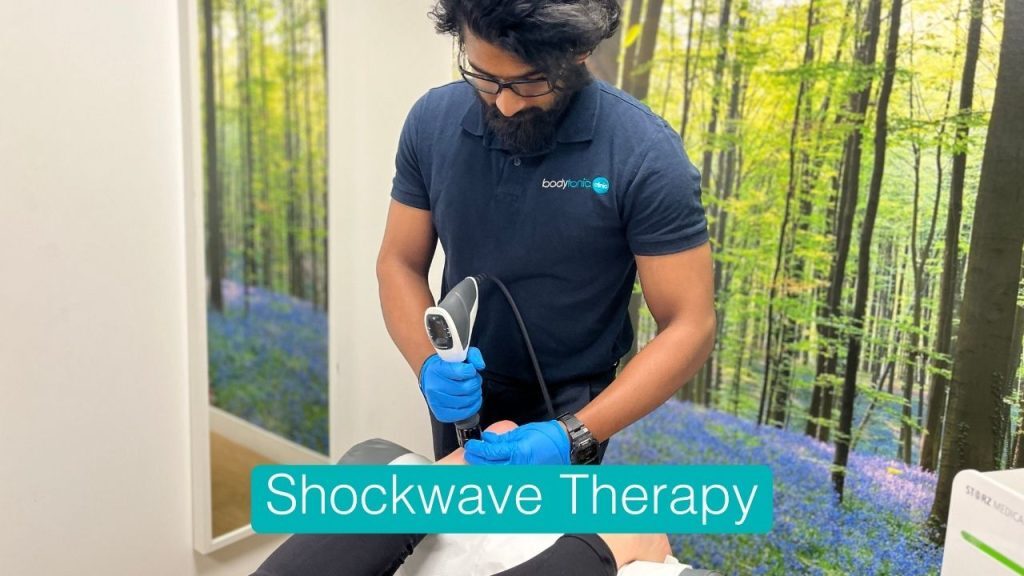
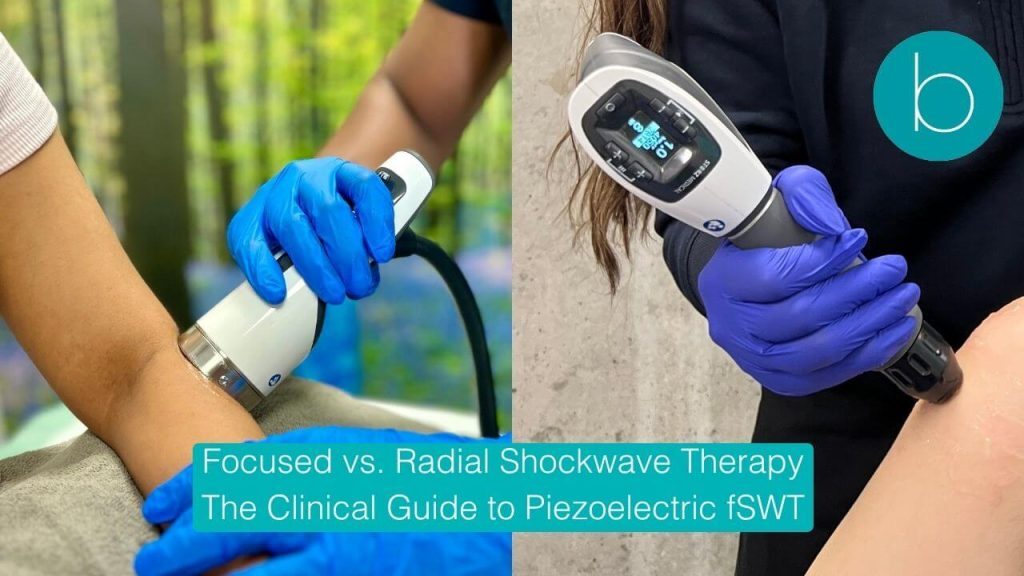
Looking for shockwave therapy near in London? Shockwave therapy or Extracorporeal shockwave therapy (ESWT) uses shockwaves produced outside the skin (extracorporeal) which are passed through skin into injured parts of the body to provide pain relief and restoration of function. Shockwaves are mechanical, audible, low-energy sound waves and impulses of energy which produce micro traumas to specific damaged tissues. The resulting procedure causes an increased blood flow to the area of concern which in turn speeds up the body’s healing process and decreases local factors which can cause pain. Shockwaves can also help to breakdown calcification & disorganised tissue. ESWT was first introduced in 1982 originally for the management of urological conditions. Research and testing developed over the years into orthopaedics where it is now used in musculo-skeletal (MSK) treatments.

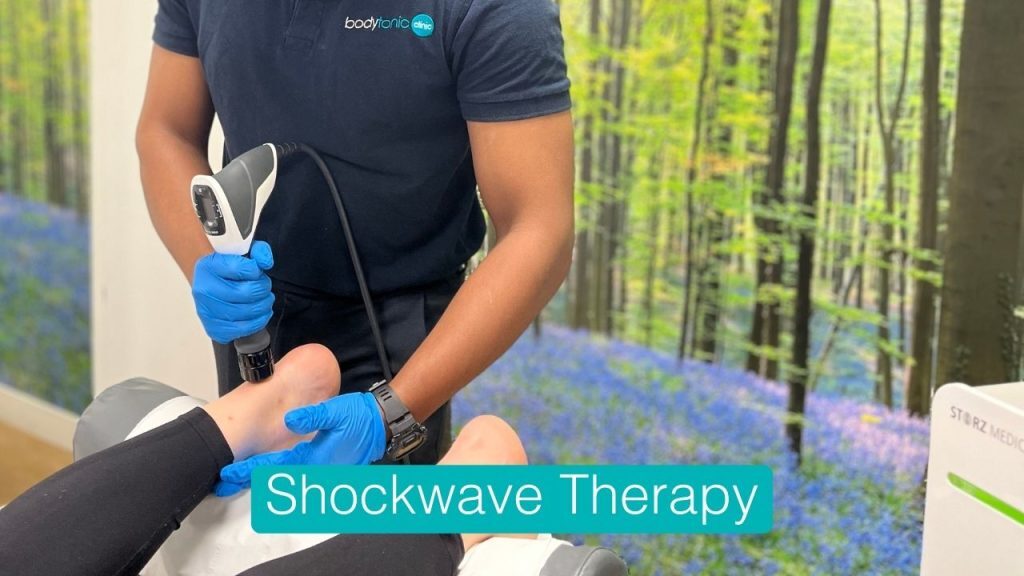
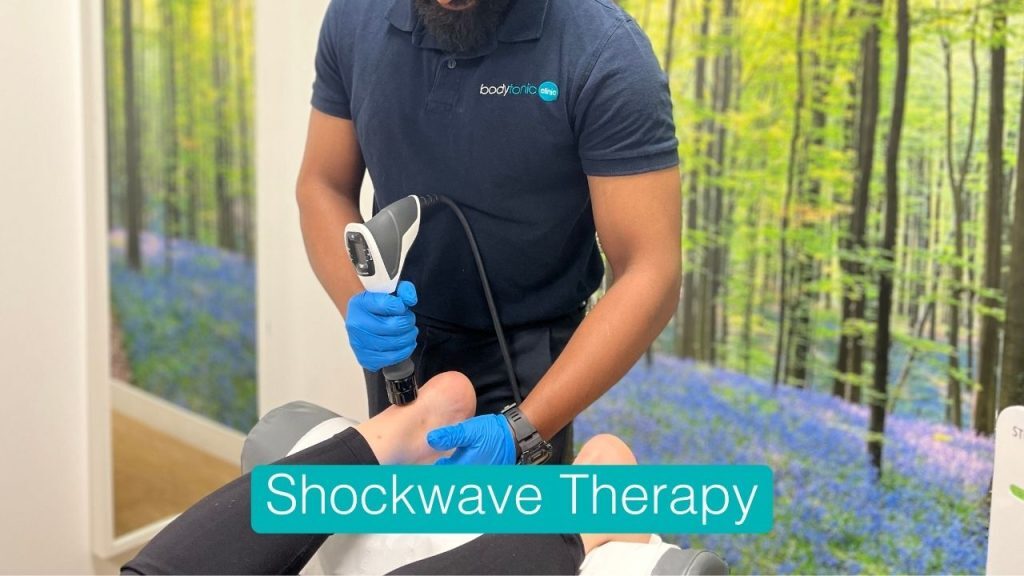
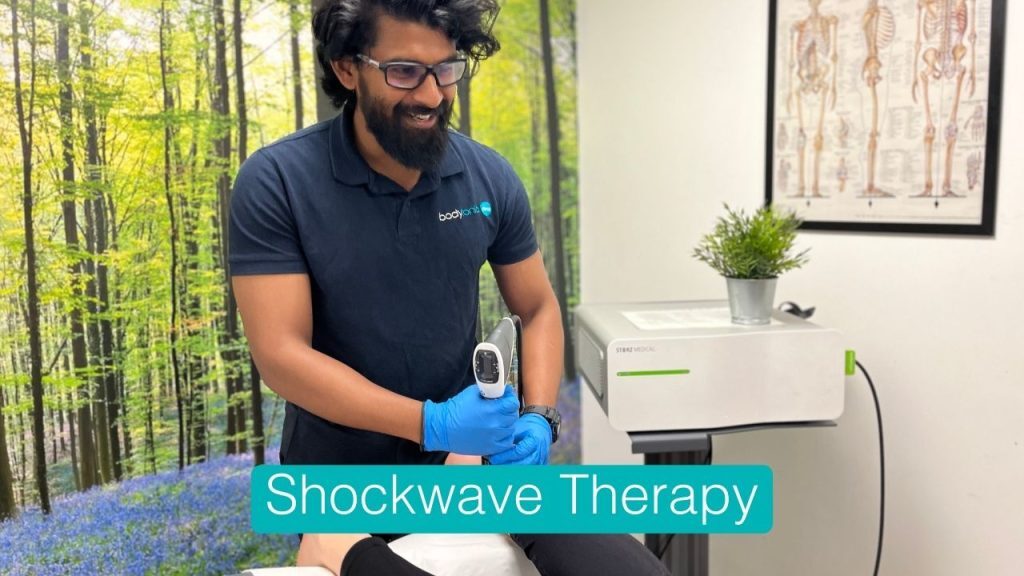
Watch this quick video to learn how our London-based therapists use radial shockwave therapy to treat chronic conditions like plantar fasciitis, tennis elbow, and rotator cuff tendinopathy. With clinics in Stratford and Canada Water, this non-invasive treatment. No GP referral is needed.

WHAT OUR CUSTOMERS THINK

Bodytonic Clinic Reviews

Our Local London Shockwave Therapy Clinic Network

Bodytonic Clinic provides professional, non-invasive extracorporeal shockwave therapy (ESWT) across East and South East London for advanced sports injury recovery and chronic tendonitis management. Your clinical shockwave assessments and specialised machine treatment protocols are delivered directly at our primary physical location hubs, which naturally support our surrounding local neighborhood:

  • South East London Catchment Area: Arrange your consultation directly at our premier multidisciplinary health hub in Canada Water SE16. Our custom-designed clinical space serves as the primary location destination for patients across Bermondsey, London Bridge SE1, New Cross SE14, and Deptford SE8.
  • East London Catchment Area: Book your diagnostic evaluation and shockwave pathway at our modern Stratford E15 Clinic Hub. This state-of-the-art facility provides direct geographic treatment coverage for patients  local to East Village E20, Bow E3, Newham E3, Leytonstone, Leyton E10 E11, and Wapping  E1W.

Note for Commuters: If you are seeking professional shockwave therapy near Canary Wharf E14 or The City of London E1, our Canada Water facility features 8 private clinical rooms open Monday through Saturday and is located just one stop away (under 5 minutes travel time) via the Jubilee line.

Radial Shockwave Therapy Prices

Clinical 6-Session Course: From £510 (averaging from £85 per session) We provide this advanced medical treatment as a clinical 6-session course to ensure the cumulative dosage required for maximum effectiveness and long-term recovery.

The Benefit of Booking a Course:

  • Save £60: By choosing the 6-session course, you secure a fixed saving of £60 compared to individual Pay As You Go (PAYG) rates.
  • Fixed Discount: This £60 saving applies regardless of the practitioner seniority tier you select.
  • PAYG Option: Individual sessions are available at a higher rate (from £95 per session).

Note: Our fees are tiered based on practitioner seniority and clinic location. Exact pricing for your preferred specialist is listed on our booking portal. No £5 Weekend Supplement applies to any Course booking.

What can ESWT be used for?

ESWT or shockwave therapy is a highly effective treatment for numerous conditions listed below, particularly connective tissues injuries and dysfunctions and chronic conditions. It is recommended by the NICE guidelines (National Institute for Health & Care Excellence) and is commonly used within the NHS and in private health care. ESWT is also available on health insurance with companies such as AXA PPP, BUPA and Vitality (although please check with your provider first before booking an appointment). Here at the bodytonic clinic we currently use a Radial Shockwave machine this allows us to effectively treat the conditions listed below:

For chronic biceps tendon damage deep within the bicipital groove, Focused Shockwave Therapy offers a precision-targeted approach to stimulate cellular regeneration where manual therapy alone may struggle.

Why should I have ESWT?

Essentially ESWT is non-invasive, non-surgical and effective in treating numerous conditions and dysfunctions. Often it is available as a second line treatment for patients who have not responded to other MSK / manual treatment options, such as OsteopathyPhysiotherapy, Chiropractor, rest, ice or even pain medication.

Focused Shockwave Therapy is now a NICE-recommended option for localised pain points often found in Fibromyalgia patients. See how it fits into a 360-degree care plan.

Booking in for Shockwave Therapy

At bodytonic clinic we require all patients to have a shockwave therapy initial consultation prior to receiving any treatment. During the initial consultation you will be seen by a qualified osteopath, physiotherapist or chiropractor for an assessment. Within this assessment the practitioner will decide if your symptoms and condition are appropriate for shockwave therapy treatment. This is due to shockwave therapy only being appropriate for specific types of musculoskeletal conditions. The practitioner will also assess your medical history to ascertain whether or not ESWT is an appropriate treatment modality, this is due to the fact that there are certain medical conditions that are contraindicated to having shockwave therapy.

In cases where shockwave therapy is appropriate you will then be advised about how many sessions of shockwave will be required. Your first session will be incorporated into your initial assessment. Further follow up treatment sessions are up to 20 minutes long.

For the most beneficial results a course of around 5 shockwave therapy treatments are recommended. Your practitioner will also run through appropriate rehabilitation exercises to further aid your recovery.

If shockwave therapy is not suitable then your practitioner will discuss the most appropriate treatment plan going forward, this may include osteopathy, physiotherapy or chiropractic treatment, or onward referral. There is enough time allocated within your initial consultation to continue with either osteopathic, physiotherapy or chiropractic hands on treatment if deemed appropriate by your practitioner. This will be priced as an osteopathic, physiotherapy chiropractic initial consultation.

What are the benefits of Shockwave Therapy?

There are many benefits associated with shockwave therapy. It is a safe, effective and non-invasive procedure that has clinically been shown to have high success rates and satisfaction rates in recent clinical trials. Benefits of shockwave therapy include:

Non-invasive and Non-surgical Treatment

Shockwave therapy treatment is classed as a non-invasive and non-surgical treatment. This means that this treatment modality does not require any incision into the body, any removal of any body tissues and does not require the use of anesthesia treatment.  As a conservative, manual treatment the procedure is performed by directing the acoustic energy from the device onto the targeted treatment areas.

Quick Return to Normal Activities Straight after the Session

Due to the fact that the treatment is non-invasive and non-surgical there is no downtime associated with this procedure. This means that all patients are able to return to their normal activities of daily living straight after the treatment. This includes going back to work and driving.

It is not recommended to do anything that you would not normally do and it is advised to avoid pain provoking or strenuous activity for 48 hours following your shockwave therapy treatment. There may be a few restrictions with regards to returning to sport and this is on an individual basis. Your practitioner will discuss this with you in order for you to achieve the optimal results from your shockwave therapy treatment.

Fast and Effective Pain Relief

Many patients experience pain relief straight after the session, with an improvement in symptoms and mobility. Some people may take a few weeks to respond to treatment.

It is normal to experience a level of pain a few hours following your treatment. This can usually last for a couple of days and in some cases may last a bit longer. This is completely normal. If you have any concerns please get in contact with your practitioner.

No Risk of Infection

Due to shockwave therapy being a non-invasive and non-surgical treatment there is no risk of infection post treatment.

Quick Treatment Time

Generally we advise a course of around 5 treatments for effective long term pain reduction. Some individuals may require more or less treatments. This is dependent on the condition being treated. Your practitioner will discuss the required number of treatments  with you during your consultation. Each session lasts around 20 minutes long and includes review of your rehabilitation exercises if needed.

Meet Our Radial Shockwave Therapy Specialists

Our highly experienced Osteopaths, Physiotherapists, and Chiropractors are certified to provide Radial Shockwave Therapy. Their individual profiles detail their specific training and experience, ensuring you are in expert hands.

The practitioners above represent our core Focused Shockwave team. To see all our therapists available for this treatment across our locations, please our team page.

Who shouldn’t have ESWT?

There are several contraindications to ESWT and this means we cannot provide this service for all patients. Predominantly if you are pregnant we advise that you do not have ESWT. There are other contraindications which mainly relate to the state of the underlying tissue and those who have pacemakers, implants and replacements. These will be discussed fully during the clinical consultation with your Osteopath, Chiropractor or Physiotherapist.

It’s also important to note that radial shockwave therapy is not suitable for treating erectile dysfunction (ED). For men seeking help with ED, focused shockwave therapy is the appropriate solution, and your practitioner can advise if this is suitable for you.

You can book a FREE online Men’s Health consultation to discuss issues such as erectile dysfunction (ED) and other concerns, and find the treatment that’s right for you.

What happens after the Shockwave Therapy Treatment?

Whilst most patients experience improvements in the symptoms reported, some patients do take a few weeks to respond and improve. Your osteopath, physiotherapist or chiropractor will advise you on the most appropriate rehabilitation exercises to further promote tissue healing and success rates.

It is also advised not to use ice on the treated area or take nonsteroidal anti-inflammatory medication such as ibuprofen or naproxen following your treatment. This is because it will reduce the healing effect of the shockwave therapy treatment.

What are the risks & side effects of ESWT?

ESWT is not without its risks and side effects. The risks and side effects with ESWT are minimal for patients. During the treatment you may experience some pain and discomfort. Following treatment you may experience increased pain, swelling, redness, bruising and occasional numbness in the treated area. This generally reduces prior to your next appointment which is usually a week later. Other risks are ligament or tendon rupture or soft tissue damage however these risks are very small.

How many treatments will I need?

In nearly all cases you will need a course of treatments depending on the condition or dysfunction being treated. Usually the treatments are 1-2 weeks apart. Each treatment is approximately 20 minutes in duration and patients often need an average of 5 appointments. The intensity of the treatments will begin at a low level before increasing to the point where you feel uncomfortable. Before receiving ESWT you will receive a full comprehensive and clinical assessment, which in some cases may include onward referral for an ultrasound, MRI or other clinical investigations.

How does ESWT work and what to expect during you treatment?

Once you’ve received your consultation your therapist will apply an ultrasound gel to the area being treated. The shockwave probe is then applied to the skin where shockwave impulses are delivered through the skin, which spread through the injured tissue. These shockwaves spread like a radial / aspherical wave which initiates the healing response or inflammatory-like response. The shockwave probe which creates the shockwave impulse has a small metal bullet within it which is fired at a plate at the end of the probe by a compressor within the machine. The application of the impulses normally takes no longer than 10-15 minutes. At the end of your shockwave session your practitioner may also prescribe you with some rehabilitation exercises. Research has shown that doing rehabilitation exercises alongside shockwave therapy provides the most beneficial results.

Is there clinical evidence that supports the use of shockwave therapy?

To date there is a significant amount of evidence that supports the use of shockwave therapy in the treatment of many common musculoskeletal conditions (see the list of conditions treated above). Research has demonstrated that shockwave therapy can significantly reduce the pain that is associated with tendinopathies (Dedes et al 2018). For more information about a specific condition please see our blog pages to find out more.

The National Institute for Health and Care Excellence (NICE) supports the use of Extracorporeal Shockwave Therapy (ESWT) for a number of tendon related conditions. NICE provides evidence based recommendations and advice for both NHS and private practice healthcare in England. NICE guidelines are set out to guide best practice in health and social care in order to; prevent ill health, protect and promote good health and improve and adapt health care services.

NICE have produced specific clinical guidelines for the use of extracorporeal shockwave therapy in the treatment of:

  • Tennis Elbow
  • Plantar Fasciitis
  • Achillies Tendinopathy
  • Greater Trochanteric Pain Syndrome
  • Calcific Tendonitis of the Shoulder

Dedes, V., Stergioulas, A., Kipreos, G., Dede, A.M., Mitseas, A. and Panoutsopoulos, G.I., 2018. Effectiveness and safety of shockwave therapy in tendinopathies. Materia socio-medica, 30(2), p.131.

Latest Blogs

Shockwave Therapy FAQs

All ESWT (extracorporeal shockwave therapy) treatments are provided by our fully qualified and experienced Osteopaths, Physiotherapists or Chiropractor.

ESWT (extracorporeal shockwave therapy) is generally not a pain free treatment. Due to the process involved where you are causing micro trauma and inflammation, there will be some discomfort or pain at the treatment site. The level of discomfort and pain depends on the type of injury that you are having treated.

ESWT (extracorporeal shockwave therapy) is safe and well backed with evidence based research. A full consultation with your Osteopath, Physiotherapist or Chiropractor will ascertain further safety check and appropriateness for treatment.

Usually ESWT (extracorporeal shockwave therapy) is used towards the end of your treatment and especially as it is often used as a treatment modality once all other treatment avenues have been exhausted. More recently ESWT is being used earlier in treatment plans to create a complete rehabilitation by helping to speed up recovery.

It is advised that you do not exercise for at least 24 hours after ESWT (extracorporeal shockwave therapy) especially exercise that stresses and works into the treated area. Meaning no tennis if you’ve had your tennis elbow treated or no running if you’ve had your achilles treated – even if you are experiencing no pain. Refraining from exercise also includes any rehab exercises that you may have been given.

ESTW (extracorporeal shockwave therapy) is available on private health insurance such as AXA-PPPBUPA and Vitality. However as usual we recommend you call your private health insurance provider to ascertain what treatment you can and cannot receive depending on your policy wording.

No, radial shockwave therapy is not suitable for treating erectile dysfunction. ED treatments require focused shockwave therapy, which targets the penile tissue specifically to improve blood flow and support erectile function. Radial shockwaves are designed for musculoskeletal conditions and are not effective for men’s sexual health issues.

Radial shockwave therapy disperses energy over a broader area and is ideal for treating musculoskeletal conditions. Focused shockwave therapy, on the other hand, concentrates energy on a specific target, such as penile tissue, and is the recommended option for erectile dysfunction (ED).

No. While radial shockwave therapy is excellent for joints, muscles, and tendons, it is not effective for erectile dysfunction (ED). If you’re seeking treatment for ED, focused shockwave therapy is the clinically proven option.

Focused shockwave therapy delivers precise energy directly to the areas that need improved blood flow and tissue regeneration in the penis. Radial shockwave’s energy spreads out and is not concentrated enough for these delicate structures, so it cannot reliably improve erectile dysfunction (ED).

Yes. Options include lifestyle modifications, medication etc. Focused shockwave therapy is often considered when men are looking for a long-term, non-drug solution that improves natural erectile function for erectile dysfunction (ED).

clipboard

Chiropractic, Physiotherapy & Osteopathy guide

Know what the difference is?
Read bodytonic clinic’s Guide for Osteopathy, Physiotherapy and Chiropractic

man icon chiropractor

Physiotherapy

Offers rehabilitation to all major systems of the body, including neurological, respiratory and cardio-vascular

Osteopathy

Osteopathy

Primarily treats the musculoskeletal system of the body

spine icon

Chiropractic

Deals primarily with spinal manipulation

 Bupa / Axa Insurance Accepted for Radial Shockwave*

Scroll to Top
Osteopathy
MSK Physiotherapy
Chiropractor
Shockwave
Men's Health
Massages
Beauty Treatments & Waxing
Foot Health
Pilates
Clinics