





Blog


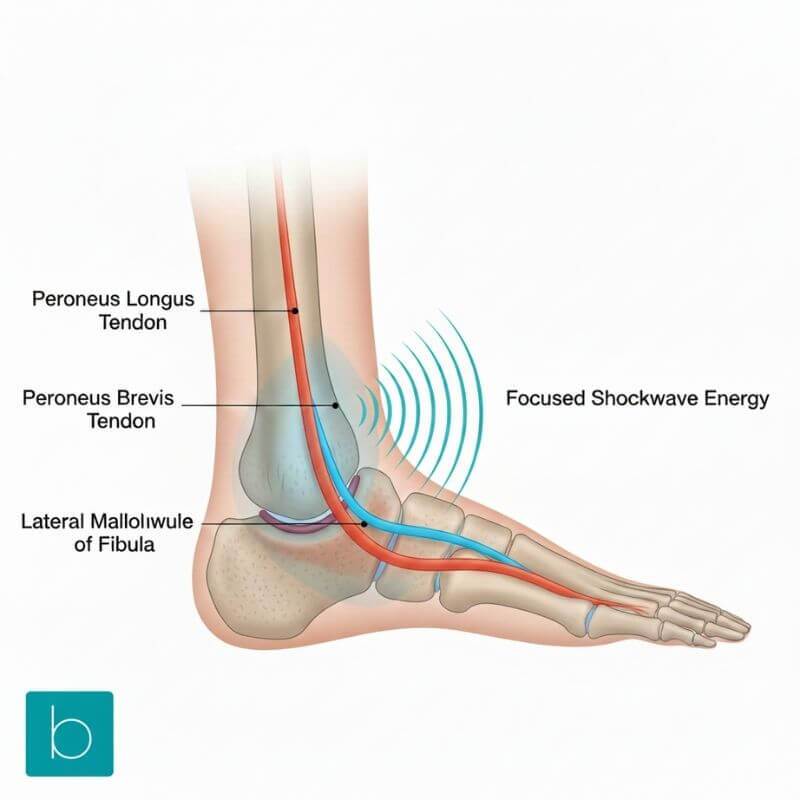
That weird clicking ankle sound-ever had it sneak up on you during a walk or stretch? You’re not alone. This sensation is actually pretty common, and in many cases, it’s not a sign of anything serious. Still, it’s the kind of thing that makes you wonder: why does my ankle click like that? Sometimes it’s harmless. Other times, it’s your body’s way of waving a small red flag.
This guide breaks down ten common causes of ankle clicking when walking, running or resting-plus when it might be time to think about Focused Shockwave Therapy.
1. Joint Imbalance and Misalignment

When your ankle joint isn’t moving quite as it should, things can start to shift a little out of place. These small changes in alignment can cause bones to rub or pop, which often leads to that familiar ankle popping sound. It’s not always painful, but it might mean something’s a bit off with your movement pattern or posture.
Nerve-Related Weakness: If your ankle clicking is accompanied by a “heavy” feeling in the foot or a loss of strength, it may not be a local joint issue. This “foot drop” or weakness is a clinical sign of L5/S1 nerve irritation. You can read more about how nerve signals from the lower back affect the feet in our clinical guide to sciatica.
2. Tight or Weak Muscles Surrounding the Ankle
Your muscles do more than just move you around—they also help guide and steady your joints. So, when the muscles around the ankle are either too tight or not quite strong enough, things can get a bit unstable. That lack of balance sometimes means tendons shift awkwardly or bones press unevenly, causing the joint to click. It’s pretty common in both desk workers with stiff legs and active people pushing through fatigue. Strengthening and stretching can often calm that ankle clicking when walking or exercising.
3. Cartilage Damage or Wear
Cartilage acts like a cushion inside your joints, helping bones glide smoothly past each other. But over time—or after an injury—that cushioning can thin out. When that happens in the ankle, movement can feel rough, and you might start noticing an ankle popping sound more often. In some cases, this wear is linked to conditions like osteoarthritis, which often brings stiffness or a dull ache.
It’s not unusual for people to ignore mild ankle pain and clicking, but early checks can often slow things down or keep it manageable.
4. Tendon or Ligament Injury

If you’ve ever twisted your ankle or landed awkwardly, you’ll know how sensitive those ligaments and tendons can be. After a strain or sprain, even if the pain fades, your ankle might still feel a bit off—sometimes literally. Tendons can start snapping over bony ridges or scar tissue, which creates that clicking ankle effect. It’s not always painful, but it’s a sign your joint isn’t moving smoothly.
Ongoing ankle joint instability from past injuries often leads to these strange sounds, and in some cases, delayed ankle injury rehabilitation plays a part.
5. Bursitis or Inflammation
Tiny fluid-filled sacs called bursae sit around your joints to help reduce friction. But when they become irritated—often through overuse or a knock—they can swell and cause discomfort. In some cases, this inflammation leads to unusual sensations or sounds, like a soft clicking or popping around the ankle. It tends to feel worse after a long day or during movement.
While bursitis itself isn’t usually serious, if your ankle keeps clicking and swelling, it might be worth getting things checked properly.
6. Overuse or Repetitive Strain
Doing the same movements day in, day out can quietly wear down your joints. Runners, dancers, and anyone on their feet a lot often notice ankle clicking when walking or training—especially if recovery is rushed. That clicking might be your body’s way of saying it’s had enough repetition without the right support.
Over time, small strains build into bigger issues, affecting how your ankle moves and feels. Rest, variety in movement, and proper footwear can make a surprisingly big difference.
7. Age-Related Changes in Joint Structure
As we age, joints naturally change. There’s usually a bit less fluid inside, the cushioning can wear down, and tissues might not bounce back like they used to. That combination often creates the perfect conditions for a clicking ankle, even without injury. These sounds are often harmless, but if they’re joined by pain, stiffness or swelling, it’s a sign your ankle might need a closer look. Regular movement and support can help keep joints smoother for longer.
8. Ankle Instability
If your ankle feels wobbly or you’ve had repeated sprains, chances are it’s a bit unstable. That lack of steady support means the joint can shift more than it should, which often leads to a subtle or sometimes sharp clicking sound. It’s common in people who roll their ankles often or have weak support muscles around the joint. Left unchecked, ankle joint instability can lead to longer-term problems with balance, walking or even running. Strength training and ankle physiotherapy are often helpful in restoring stability.
“Persistent ankle clicking is often linked to poor foot alignment. This mechanical shift is a primary cause of hallux valgus development. Learn how we manage Bunions and Foot Alignment through integrated Osteopathy, Chiropractic, MSK Physiotherapy and Podiatry.”
9. Improper Footwear or Orthotic Support

The shoes you wear can change how your whole body moves—ankles included. Footwear that’s too soft, too rigid, or just doesn’t fit quite right might cause your ankles to work harder than they need to. That extra strain can throw off your alignment, sometimes leading to pain, or that odd clicking noise. The same goes for worn-out trainers or unsupportive insoles.
If your ankle pain and clicking seems to change with your shoes, it might be time for a rethink on support.
10. Previous Ankle Injuries
Old injuries have a way of sticking around, even after they’ve “healed.” If you’ve ever had a bad sprain, fracture, or ligament tear, your ankle may not move quite the same again. Scar tissue, stretched ligaments, or slight changes in joint shape can all contribute to a clicking ankle. It might not hurt day to day, but those small changes often affect how the joint functions.
Ongoing ankle injury rehabilitation—even years later—can help restore better movement and reduce that persistent ankle popping sound.
A clicking ankle isn’t always cause for concern, but when it sticks around—or comes with pain—it’s worth getting a professional opinion. Spotting small issues early often prevents bigger ones later. If something doesn’t feel quite right, contact us to book an ankle physiotherapy assessment with Bodytonic Clinic’s team today.
To resolve chronic back issues, we follow a structured 3-step MSK Journey to Optimal Health that targets the root cause.